Why I Grow Herbs and Flowers With My Vegetables (And What It Actually Does)
Most people think companion planting is about magic pairings (of plants). Thinking this way leads to confusion and disappointment. Companion planting is all about diversity of plants and what systems that adds into your garden.
I don’t use companion planting as a trick — I use it as a strategy.
Companion Planting Isn’t About Pairings, It’s About Diversity
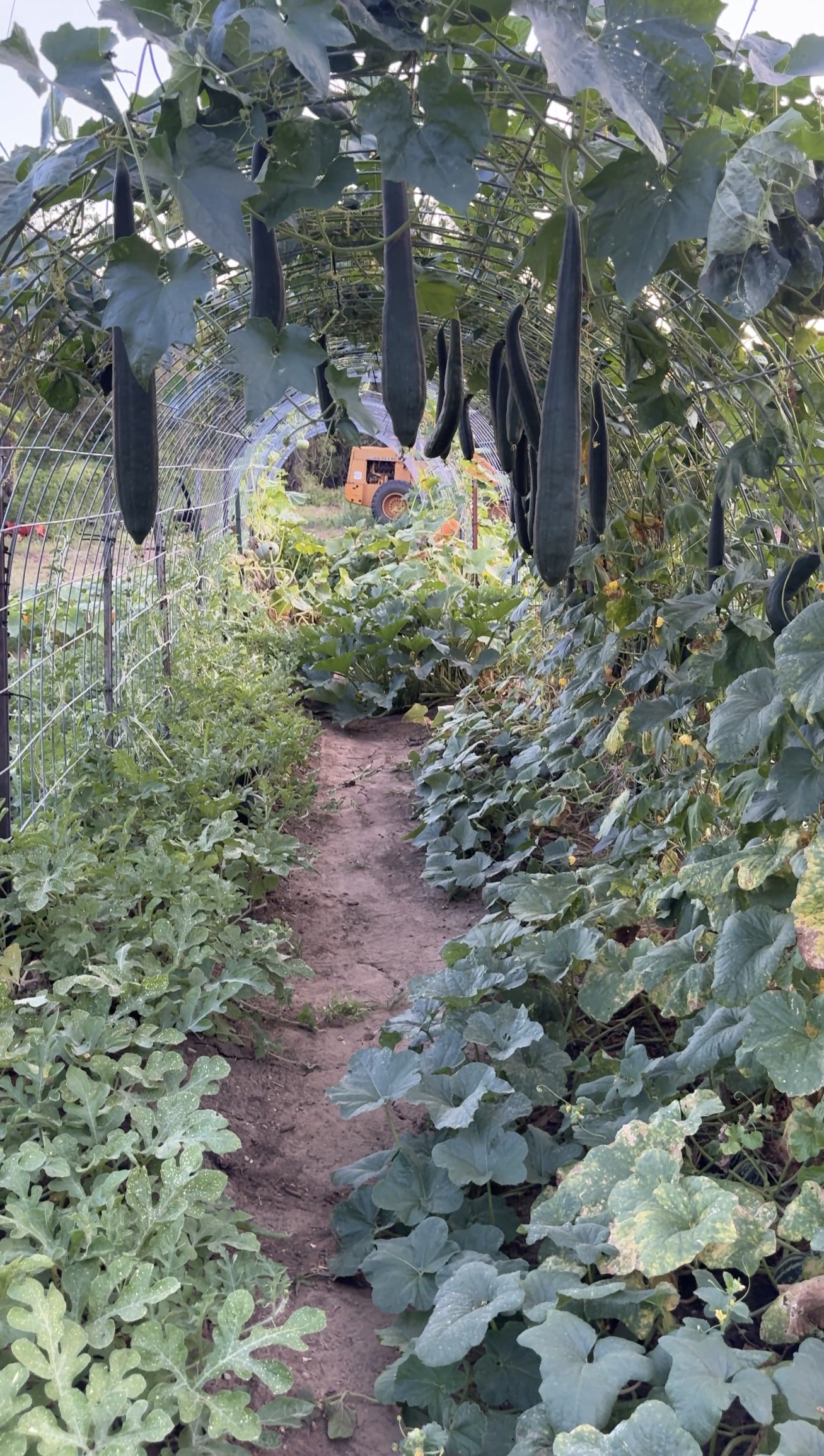
If you were to solely plant a row or two of tomatoes, that is considered monoculture (on a bigger scale, it would be only growing tomatoes). Mixed planting (planting other plants with the tomatoes) provides diversity to the garden and supports a multitude of things. It creates a system that allows for your garden to be fruitful, by encouraging better production and less bad pests.
Diversity of plants is what changes how pests behave (good pests and bad pests). You want good pests to thrive in your garden. And you want bad pests to be shown the door. Mixed planting does this for you in the garden. The goal isn’t to eliminate pests — it’s to create balance. And to encourage bad pests to find another place to go.

How Herbs Support Vegetables in a Real Garden
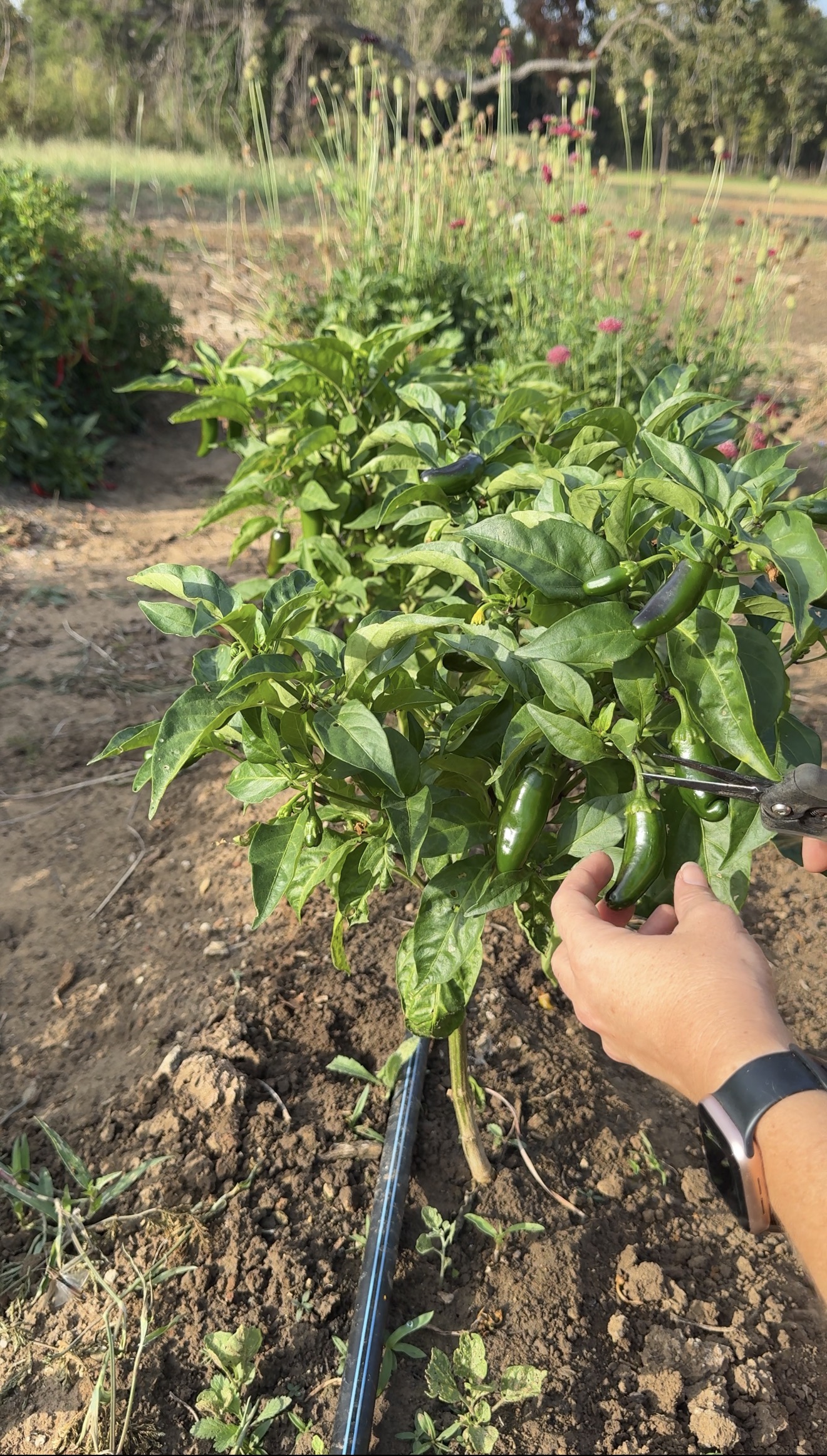
Did you know herbs can be scent disrupters for pests (including the bigger pests like deer)? BTW: Onions and garlic can also do this in your garden (even though they are not necessarily ‘herbs’). Herbs can also act as a habitat for good bugs and can be stress reducers for some plants by either providing necessary shade, airflow and root diversity). Let herbs become your best friend in your garden by allowing them to wear the pest pressure reduction cape.

Why Flowers Matter in a Food-First Garden
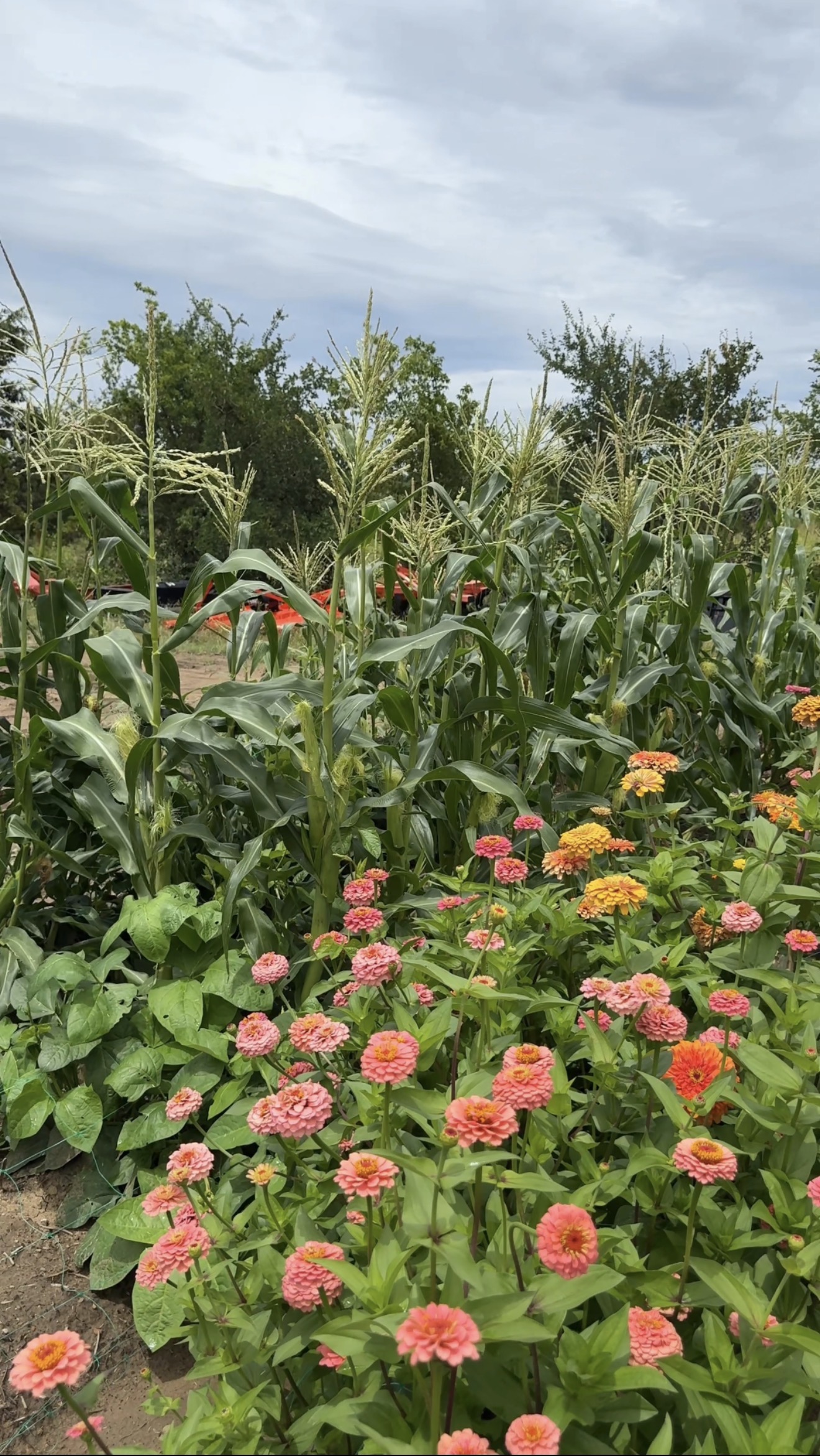
One of the first questions my husband asked when he walked through my garden after I got it all planted out, “what is that?” and I responded “flowers”. And then he’d ask “what is that?” and I responded “a flower” and we repeated that over and over because I was growing more than just produce & herbs in my garden. Flowers are more than just pretty things to look at in your garden. While they do bring so much beauty, they are also there on purpose in my garden. Because flowers bring in the beneficial insects (the good pests). And they help create a more resilient ecosystem in your garden.
Flowers aren’t decoration — they’re infrastructure.
What Companion Planting Doesn’t Do (And Why That Matters)
Here’s the truth that gets missed in all the posts, IG Reels and Tiktoks…companion planting isn’t the end all be all. It is not the FIX that people say it is. Companion planting does NOT replace your eyeballs in your garden (aka your own observations). Companion planting does NOT prevent all pests. Companion planting does NOT magically work instantly. And lastly, companion planting does NOT mean that you will never intervene in your garden.
Yes, it is a solid system to help support your organic efforts. But that’s where it stops. It’s a system to use in your garden to support your ecosystem.

How I Use Companion Planting in My Own Garden
Here is my garden planning process: decide what I’m planting, draft where it’s going, confirm what needs to be planted with it. And then take action when it’s time. It’s truly that simple. Once I know what row is getting what plant (and after I’ve also confirmed that I’m not planting foes close to each other, because yes that is a thing), I decide what companion plant is also going in that row, to support that plant.
If I see something needing some help, I’ll consider planting more companion plants around it (although I do try to heavy load during planting time to avoid this, but sometimes plants die and I need replacements). In this last planting season, I didn’t have a lot of luck with nasturtiums (which is a companion plant and also considered a “trap” crop meaning it attracts the bad guys to it, to keep the bad guys from the plants you don’t want it attacking). Some did okay, but they slowly died. I don’t know why, as everything else I planted did well. It could be the type of nasturtiums or the seeds just weren’t good. I’ve said that your garden is a giant experiment and that you need a mindset aligned to that, so that when things go wrong, you try again in a different way (whether that is a new variety or you direct sow vs seed start indoors). Don’t just write it off after one attempt. You never know what’s going to work or not work until you try it.
How Companion Planting Supports Pest Management
Pest control starts long before pests appear. And companion planting helps support this effort. Some plants that you can use as companion plants are considered trap crops (like nasturtiums) and some are considered scent disrupters (like marigolds, onions & garlic). Companion plants can encourage plant health (like beans by providing nitrogen to the soil it’s planted in) and reduce pest pressure by attracting beneficial insects like parasitic wasps & lady bugs/beetles). Using companion planting alongside observation (walking your garden routinely), is what helps keep bad pests at bay.

If You’re Trying to Reduce Pest Problems Long-Term…
Companion planting needs to be part of your system. Pest prevention works best when planning, diversity, and observation work together. If you need more help with pest prevention systems, check out my course “Stop Garden Pests Organically”.
Companion planting is about resilience. It’s learned over time. And works best when you understand why, not just what.