What I Look for Before Treating Any Garden Pest
An Organic, Prevention-First Approach

Pests are going to happen. The small kind and sometimes even the large kind (deer, rabbits, birds, squirrels, etc). While the larger kind can be a nuisance, for the sake of this article, I’m focusing on the small kind like hornworms, squash bugs, leaf-footed bugs, etc (as the big kind need more large scale solutions like fencing, noise makers, water sources, etc). What I don’t want you to jump to, when you see garden pests, is “what do I spray?”
While organic gardening allows for some sprays (Neem Oil, BT & DE), we need to figure out what’s bringing them to your garden party in the first place. If we can have a prevention mindset, then we end up using less organic sprays all together.
Pest issues are usually a garden signal, not the root problem.

I Start With the Plant, Not the Pest
I wish I could promise you that you’ll never see a pest in your garden ever. But that’s just not reality. However, I can promise that if you setup your garden with companion plants, rotate your plants each season, fully remove your plants at the end of each season, fertilize, remove dead/dying foliage quickly, consistently deep water your plants, you will encourage healthy plants which discourages pests.
Stressed plants send out signals that attract bad bugs. Healthy plants do not. And if you have more healthy plants than stressed plants, you’ll have less pests. Even if pests show up looking for a feast, healthy plants have a higher tolerance against them.
Pest pressure is often a symptom of stress, not the original issue.

I Look at the Growing Conditions Before Anything Else
Prevention begins with plant spacing, airflow, sun exposure and plant diversity. A lot of people instruct to plant densely and while that can work with companion planting, it doesn’t mean to stuff a bunch of the same plant in a tight space. Companion planting means you’re planting multiple types of plants together, but still making sure there is proper airflow & sun exposure.
If you look at the back of a seed packet, you’ll see plant spacing recommendations. Seed packets were setup & written for a large scale gardener. And while I have the space to be exact with what each packet states, it doesn’t work for backyard gardeners. So then you need to understand how much space you do have, how much of a specific plant you want to grow (volume it can produce for you) and whether or not it will work for you, or if you’ll need to succession plant to get the volume you crave. A small space can produce 100lbs of food every year. It’s all about the plan. Prevention happens in the garden plan.

I Identify What’s There Before Deciding What to Do
It’s important to know that not all damage needs intervention. In my last growing season, I had an abundance of leaf-footed bugs. They loved my tomato plants. (They are a sucker type of bug – and don’t really hurt the fruit unless they’re allowed to move in rent free and then they can really suck out nutrients/moisture from the plants leaving them misshapen or even reducing the plants production of new fruit).
The best way to treat for them (because they breed like rabbits) is to either pick them by hand and squish them (or pick them by hand and drop into a jar of soapy water), use a hand-held vacuum & hoover them or spray with a water/peppermint castille soap mixture (although be careful as this will dry down with a white powder left behind). Adults are a little less active in the morning (they can fly), but your goal is to spot them in the nymph stage and get rid of them before they make it to adults.
Some pests are only temporary. And some pests decide your garden is the best thing ever and may never leave. But also, some of the good guy pests may take up residence and you want that because that means they’ve found the bad guys in your garden and can be your mini-army providing garden protection.
I started this section by stating that not all damage needs intervention. And what I mean by that is that some damage is going to occur, no matter how hard you work at prevention. Your goal is to setup your garden to the best of your ability, walk it daily (spend 15 minutes looking for the good guys and the bad guys) and take care of what you see, when you see it. Keep training your observation skills with these routine garden walks. You’ll become better equipped to know what to do and when to do it!

I Decide Whether Intervention Is Necessary at All
You will quickly learn what kind of pest pressure you can tolerate vs what you cannot. The first time you see damage, you will feel gutted. But I promise you, it’s not the end of the world. Not only did I have leaf-footed bugs in abundance, I also had cucumber beetles in abundance (and I only had 3 cucumber plants). Those cucumber beetles LOVED my squash/pumpkin/zucchini plants. But it didn’t affect my food production.
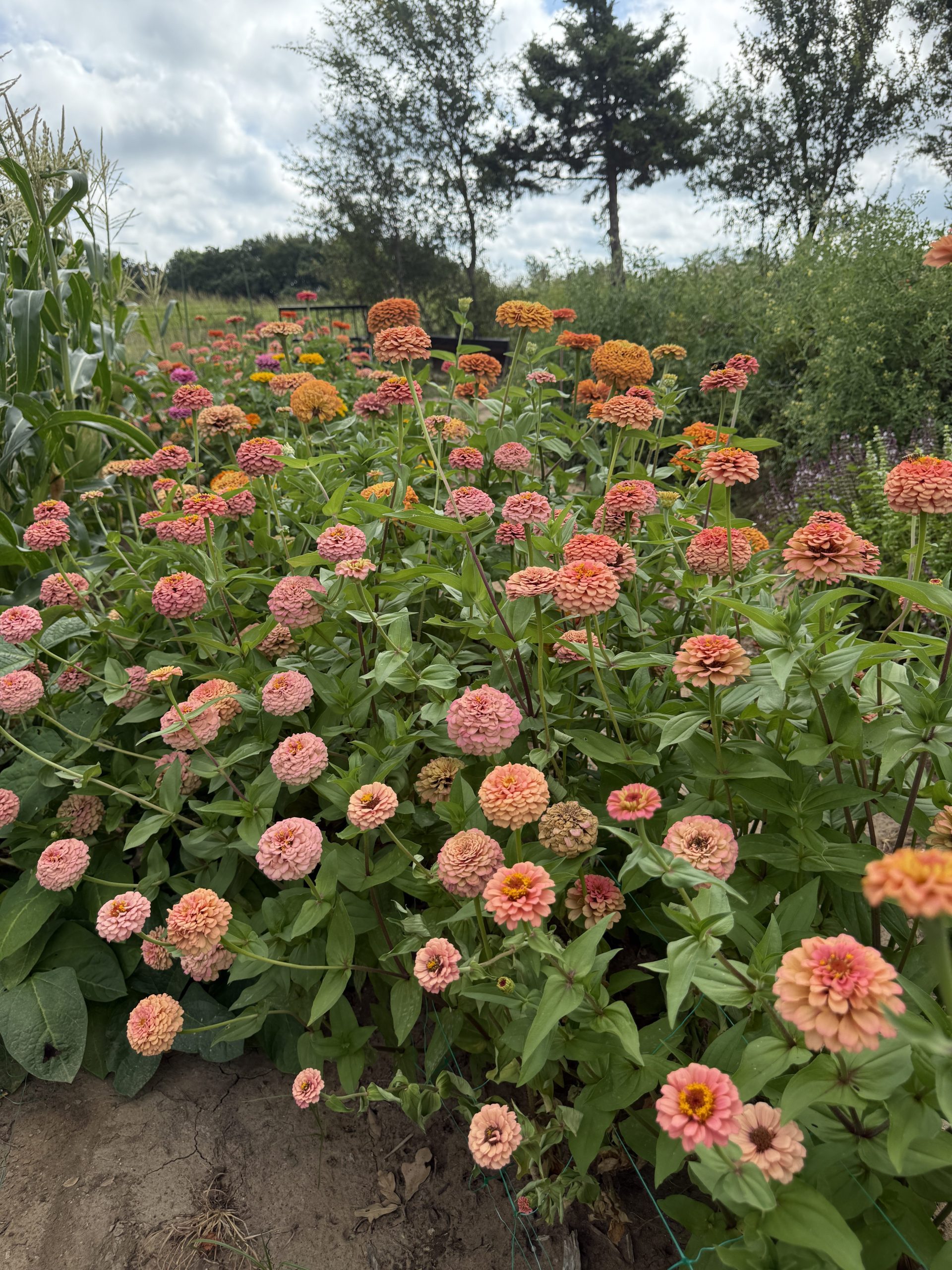
Would I prefer to not have either of them in abundance next season, absolutely. So I’ll be focusing on more companion planting around those plants in order to help attract more good guys and less bad guys. I could’ve sprayed as part of prevention, but honestly, I’d rather do other garden supporting activities that promote healthy plants, so they can really defend themselves (remember I said healthy plants can handle pests; stressed plants cannot – and they signal for those bad guys to arrive).
When I Do Treat, I Choose the Least Disruptive Option First
Look…I get it. If pests bother you (the bad guys that is; PLEASE LEAVE THE GOOD GUYS ALONE!), do something about it like hoovering them up or picking them off by hand and squishing or dropping into a jar of soapy water. Organic sprays should be one of the last things you lean to because you do still run the risk of hurting the good pests in the process.
So start with the least disruptive option possible!
This Is Part of a Larger System – Not a One-Off Fix
Pest control is something you do in tandem with growing food. Planning, diversity, and observation reduce problems over time. And your experience will compound season after season. One year, you may see more hornworms. And another year, you might see more cucumber beetles. No one single year is going to be pest-free. The thing that needs to be understood, is that your garden is constantly teaching you. And it’s what you do with that, that matters the most. If you can lead with an experiment/teaching mindset, you’ll stay golden in your garden. I am super grateful for what my garden teaches me. It makes me better gardener and that knowledge compounds on itself.

Want a More Structured Way to Learn This?
The point of this article is to explain the way I think in my garden. It’s to encourage you to think similarly so that you eventually understand the signs and signals you see when you routinely walk through your garden, in observation mode. This way of thinking supports a garden that grows 100s of pounds of food for my family and my community every year (I sell my extra produce & plants through my Farm Stand).
If you want a more structured way to learn how to have this mindset in your own garden, feel free to check out my course Stop Garden Pests Organically. This course walks you through system by system, step by step, so that you too can have confidence in your garden. Especially if you feel like pests are derailing your garden, season after season, and your garden is not producing like you dream it would.
Pest control isn’t about reacting faster. It’s about understanding what’s happening. Confidence comes from observation and not in grabbing a product to fix something.